

Awareness & Education
Increase recognition of CADASIL among physicians, patients, and the public — closing the diagnostic gap with accessible, accurate resources.
Explore →CADASIL is the most common inherited cause of stroke in adults — yet it is consistently missed, misdiagnosed, and under-researched. We exist to change that. For patients. For families. For every clinician who deserves the right information at the right moment.
CADASIL — Cerebral Autosomal Dominant Arteriopathy with Subcortical Infarcts and Leukoencephalopathy — is a hereditary condition caused by mutations in the NOTCH3 gene. It silently damages the small arteries deep in the brain, leading to migraine with aura, recurrent strokes, mood changes, and progressive cognitive decline.
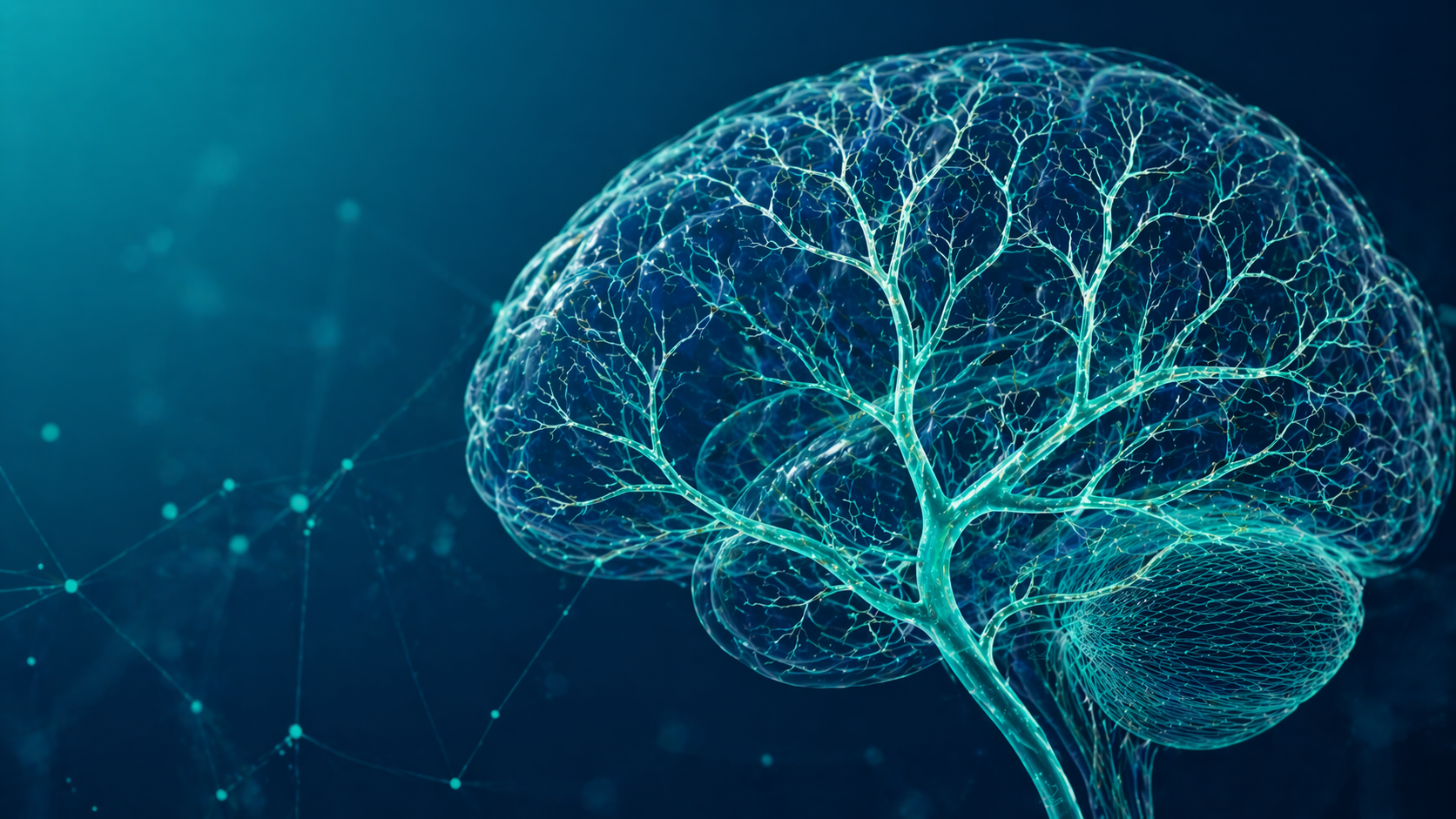
We are organized around the levers that change outcomes for people living with CADASIL — from the moment a symptom appears to the day a therapy reaches them.
Increase recognition of CADASIL among physicians, patients, and the public — closing the diagnostic gap with accessible, accurate resources.
Explore →Connect patients with researchers, support clinical trial recruitment, and amplify the work of academic centres advancing CADASIL science.
Explore →Provide clear care pathways, peer connection, and practical guidance for life with CADASIL — for patients, partners, and the next generation.
Explore →Improve access to genetic testing, standardize care across health systems, and integrate CADASIL into stroke and rare-disease frameworks.
Explore →Most CADASIL diagnoses are delayed by a decade or more. The clinical pattern is recognizable when you know what to look for.
Often the first symptom, presenting in the 20s–30s. Visual or sensory aura that may be prolonged or atypical.
Learn more →Recurrent lacunar strokes or TIAs — typically without classic vascular risk factors. A hallmark of mid-life CADASIL.
Learn more →Apathy, depression, and progressive subcortical cognitive impairment — often misattributed to stress or "burnout."
Learn more →Confluent T2/FLAIR hyperintensities — especially in the anterior temporal lobes and external capsules — are nearly pathognomonic.
Learn more →Multiple relatives across generations with strokes, "early dementia," or unexplained migraine — autosomal dominant inheritance.
Learn more →NOTCH3 sequencing, ideally with genetic counselling. Most pathogenic variants involve cysteine residues in EGFr domains 1–6.
Learn more →A structured approach turns a confusing presentation into a confirmed diagnosis — usually within weeks, not decades.
Mid-life stroke or migraine with aura, mood or cognitive change, plus a positive family history. Pattern recognition is the first and most missed step.
Brain MRI with FLAIR is essential. Look for confluent leukoencephalopathy with anterior temporal pole and external capsule involvement, and lacunar infarcts.
NOTCH3 gene sequencing — ideally as part of a small-vessel disease or stroke gene panel — confirms the diagnosis. Genetic counselling supports the patient and family.
From new biomarker work to early-stage therapeutic candidates, CADASIL research is accelerating. Patients and families are the missing link in turning that progress into trials, registries, and care.
Plasma NfL, advanced diffusion MRI, and emerging skin-biopsy assays.
Antisense oligonucleotides and gene-targeted strategies in early phases.
Natural-history cohorts powering trial readiness across continents.
iPSC-derived vascular cells unlocking mechanistic discovery.
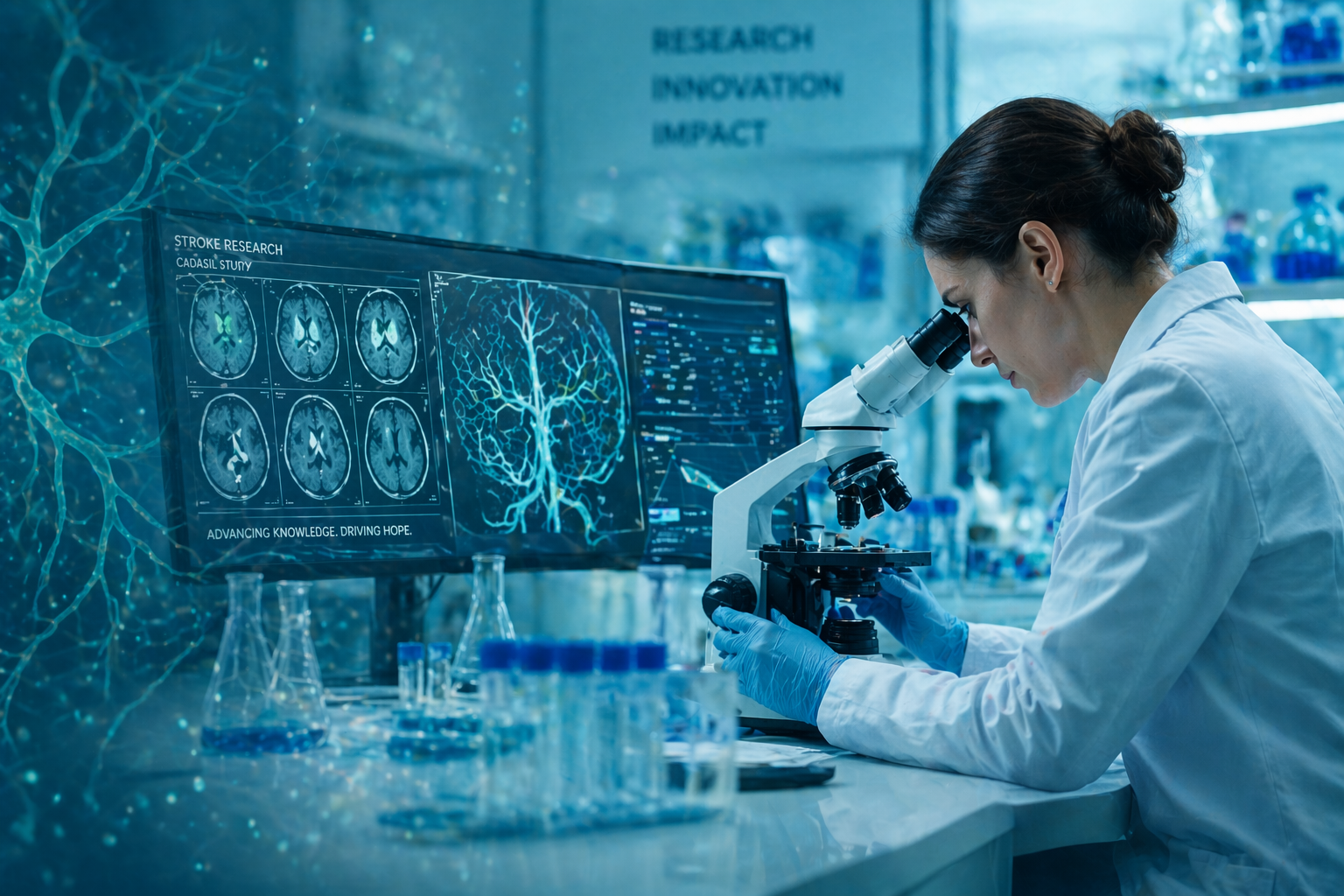

CADASIL touches generations. We connect patients, partners, children, and caregivers with peer community, vetted information, and the practical tools to advocate for the care they deserve.
For years, my migraines were dismissed as stress and my mother's "early dementia" was never explained. A single MRI and a genetic test connected three generations of our family — and finally gave us a name.
— A CADASIL family member, Ontario
Cerebral Autosomal Dominant Arteriopathy with Subcortical Infarcts and Leukoencephalopathy. It is a hereditary disease of the small blood vessels of the brain, caused by mutations in the NOTCH3 gene.
No. CADASIL is the underlying genetic disease that causes recurrent strokes and other neurological symptoms. It is the most common monogenic cause of stroke in adults — but stroke is one of several manifestations.
Autosomal dominant. Each child of a parent with CADASIL has a 50% chance of inheriting the pathogenic NOTCH3 variant. Severity can vary even within the same family.
There is currently no disease-modifying therapy. Care focuses on aggressive management of vascular risk factors (especially blood pressure and smoking), migraine prevention, mood support, cognitive rehabilitation, and avoiding therapies — like IV thrombolytics in some settings — that may carry added risk. Several therapeutic strategies are now in early development.
Predictive testing is a deeply personal decision. We strongly recommend pre-test genetic counselling. Knowing your status can guide vascular risk management and family planning — but should always be a choice, not a demand.